
Collection: Replacement axles bearings and hubs
Coffs Metal Works can build an axle to suit your exact needs. Whether you require a machined solid axle, a welded hollow axle, or a torsion axle, we have you covered. While our torsion axles aren’t manufactured onsite, they are 100% Australian‑made, ensuring quality you can trust.
All of our drop axles are built in‑house, allowing us to customise your axle with precision—down to hundredths of a thousandth of an inch. This level of accuracy gives your trailer the smoothest, most reliable ride possible.
Important Information
Providing us with your old axle is the best way to ensure you get exactly what you need. While we can work from measurements, this can be challenging—especially if you’re measuring on your own or if your existing axle is bent, twisted, or broken. Having the original axle allows us to match specifications with complete accuracy.
Bearing Types
Bearing selection is just as important. Please supply your old axle and bearings or clearly specify the exact bearings you want fitted to your new axle. This ensures compatibility and guarantees your new axle is built to the correct specifications.
postage we are happy to post at your expense
Axle Lengths that we need
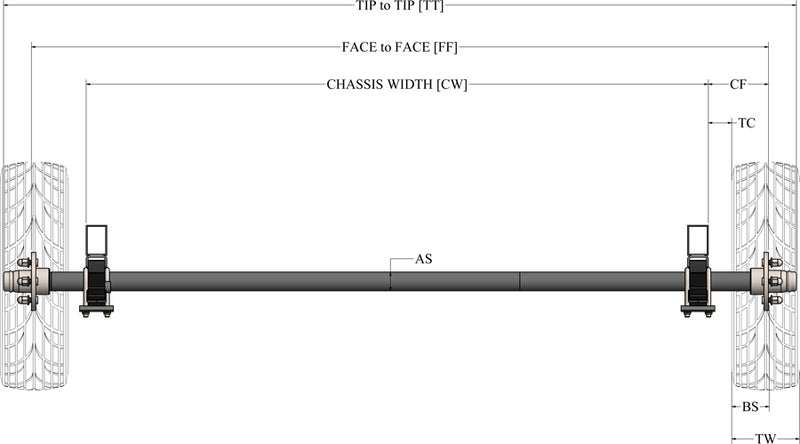
Identifying the Bearings on Your Trailer Hubs
Never underestimate the importance of your trailer wheel bearings. Because they’re hidden inside the hub, it’s easy to overlook wear or damage unless you carry out a proper inspection. A well‑greased, correctly fitted wheel‑bearing assembly allows your wheels to spin freely and ensures a safe, reliable towing experience. Once bearings become worn, dry, aged, or develop excessive free play, they can quickly become hazardous—not only for you, but for everyone else on the road.
This quick and simple guide will help you understand and identify your wheel‑bearing setup. With the right information, you can maintain your trailer properly and avoid costly headaches down the track.
Why Correct Identification Matters
Knowing your exact bearing setup is essential when replacing hubs or bearings. Using the wrong components can lead to premature wear, overheating, or even complete bearing failure.
How to Identify Your Bearings
The easiest and most accurate way to determine which bearings your trailer uses is to remove the hub and check the reference numbers stamped into the metal of both the inner and outer bearings. These numbers directly correspond to the correct replacement parts.
If the numbers are worn, unclear, or missing, the next best option is to measure both bearings. Accurate measurements will allow us—or any supplier—to match the correct bearing set for your axle.
What You’ll Need
The diagram below outlines the key “part numbers” and measurements required to correctly identify your bearings:
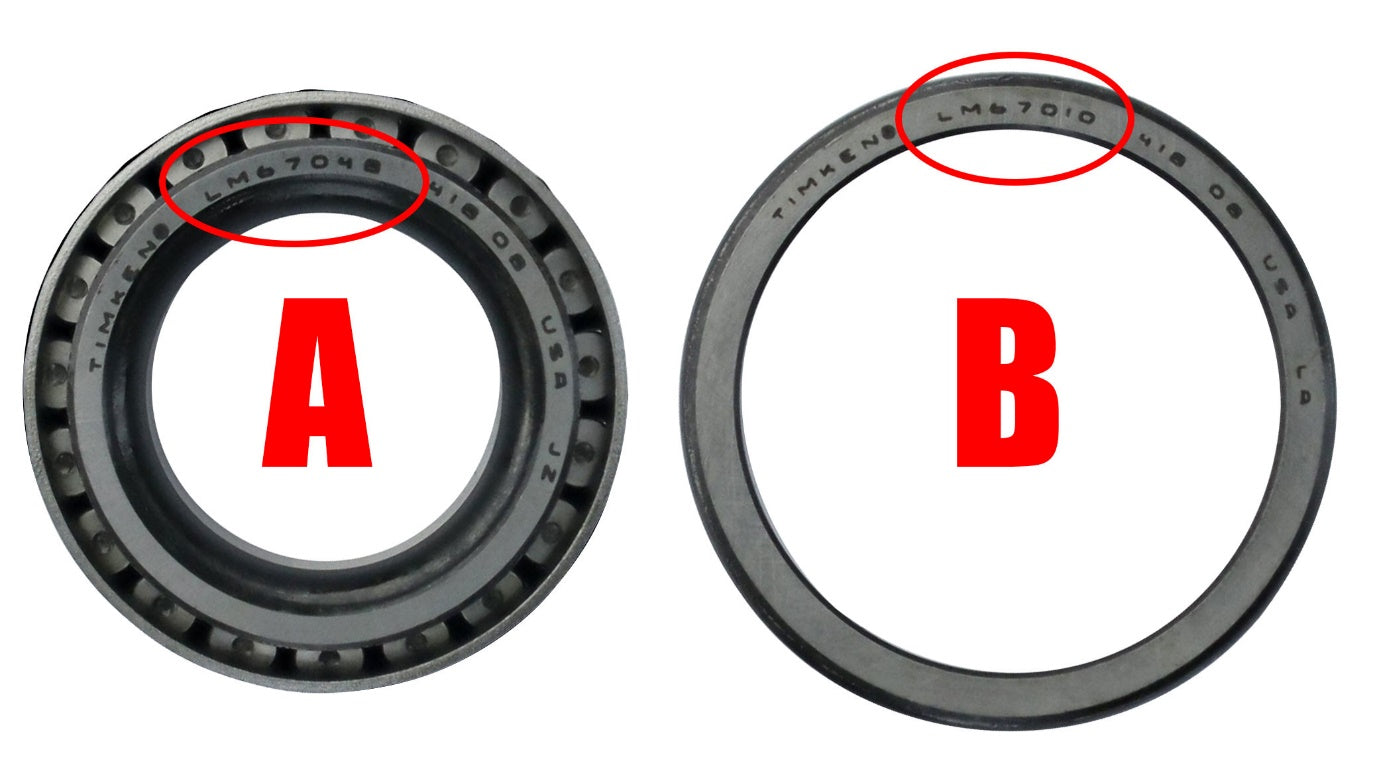
Understanding Bearing Identification
Picture (A) – The Bearing (Cone)
This is the bearing itself. Example: LM67048
In this example, LM indicates that it is a Holden‑type bearing, and the five‑digit number that follows is the bearing’s part number.
Picture (B) – The Cup (Race)
This is the cup that the bearing sits in when assembled. If the cup has been pressed out of the hub and turned over, you’ll find a number stamped into it.
Example: LM67010 The important part here is the last two digits.
This means the complete bearing set number is: LM67048/10
This combined number is made up of the full bearing (cone) number and the last two digits of the cup (race) number.
When Numbers Can’t Be Identified
If the stamped numbers are worn, missing, or unreadable, you can still identify the correct bearings by measuring them.
Bearings Have Two Components
- The Cup (Race): Pressed into the hub
- The Cone (Bearing): Contains the rollers
Bearings should always be replaced as a matched set—cone and cup together—to ensure proper fit and longevity.
Essential Measurements
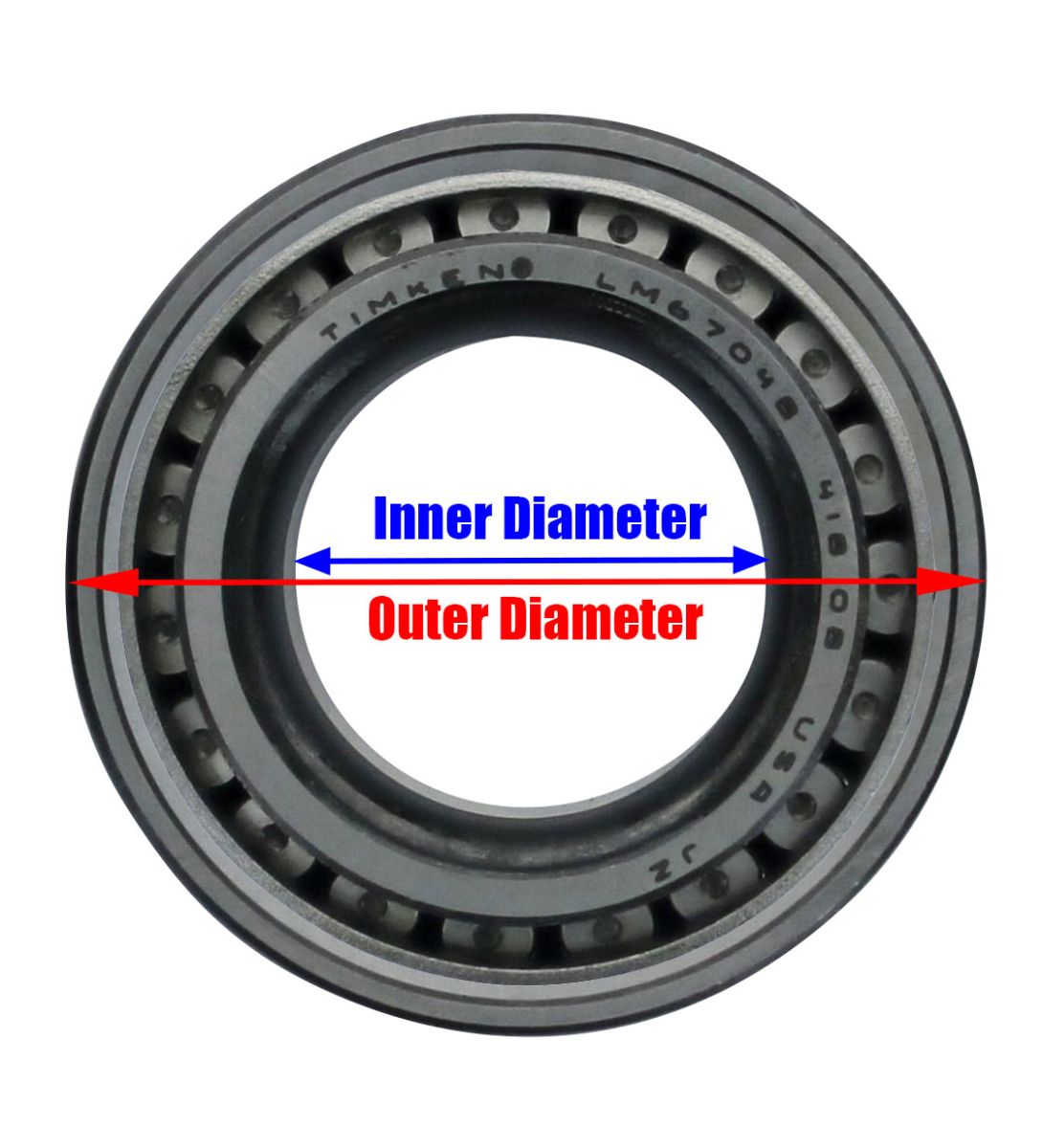
To correctly identify your bearings, you’ll need two key measurements for each bearing:
- I.D. (Inner Diameter)
- O.D. (Outer Diameter)
It’s also crucial to measure your seal accurately. A poorly fitted or incorrect seal can allow contaminants in or grease out, leading to premature bearing failure.
Inner vs Outer Bearings
In a typical hub assembly:
- The bearing closest to the centre of the trailer is the inner bearing.
- The bearing closest to the outside of the hub is the outer bearing.
On common SL‑type bearings, the inner bearing is always the larger of the two.
Measuring Your Bearings
The image below illustrates:
- Where to measure
- Which surfaces to measure
- How the bearings sit on the axle
These are some of the common Trailer Bearing Combinations listed below:
| Axle Type | Inner Bearing & Cup - Part No | Inner Bearing Dimensions ID x OD x Width in MM | Outer Bearing & Cup - Part No | Outer Bearing Dimensions ID x OD x Width in MM |
|---|---|---|---|---|
| LM (Holden) | LM67048/10 | 31.750 x 59.131 x 15.875 | LM11949/10 | 19.050 x 45.237 x 15.494 |
| Slimline (Ford) | L68149/10 | 34.988 x 59.131 x 15.875 | LM12749/10 | 21.986 x 45.237 x 15.494 |
| Composite | LM67048/10 | 31.750 x 59.131 x 15.875 | LM12749/10 | 21.986 x 45.237 x 15.494 |
| Parallel/ESS | L68149/10 | 34.988 x 59.131 x 15.875 | L68149/10 | 34.988 x 59.131 x 15.875 |
| Melbourne Trailers 2T | 25580/20 | 44.450 x 82.931 x 23.812 | LM67048/10 | 31.750 x 59.131 x 15.875 |
| Melbourne Trailers 3T | 30210/10 | 50 x 90 x 21.75 | LM29749/10 | 38.1 x 65.088 x 18.034 |
| TB500 | 30308 | 40 x 90 x 25.25 | 15123/245 | 31.750 x 62 x 18.161 |
| Dexter 1.8T / D35 USA | L68149/11 | 34.987 x 59.975 x 15.875 | L44649/10 | 26.99 x 50.292 x 14.224 |
| Dexter / D44 USA | L68149/11 | 34.987 x 59.975 x 15.875 | LM67048/10 | 31.750 x 59.131 x 15.875 |
| Dexter 2T / D60 USA | 25580/20 | 44.450 x 82.931 x 23.812 | 15123/245 | 31.750 x 62 x 18.161 |
| Dexter Hub 8-91A USA | L44643 | 25.4 x 50.292 x 14.224 | L44643 | 25.4 x 50.292 x 14.224 |
| Dexter USA | L44649/10 | 26.99 x 50.292 x 14.224 | L44649/10 | 26.99 x 50.292 x 14.224 |
| ALKO 1.5T | LM29749/10 | 38.1 x 65.088 x 18.034 | LM67048/10 | 31.750 x 59.131 x 15.875 |
| ALKO 2T / TX | 30210/10 | 50 x 90 x 21.75 | 15123/245 | 31.750 x 62 x 18.161 |
| ALKO 3T | 30210/10 | 50 x 90 x 21.75 | LM29749/10 | 38.1 x 65.088 x 18.034 |
Bearing Maintenance – Why It Matters
It’s good practice to check and maintain your trailer bearings regularly—generally every 6 to 12 months, even if your trailer isn’t used often. During each inspection, look for signs of wear, overheating, lack of grease, or excessive free play.
In many cases, a visual inspection, fresh grease, and a simple adjustment may be all that’s needed.
However, if you’re ever unsure about the condition of your bearings, the safest option is simple: If in doubt, replace!
Well‑maintained bearings last longer, perform better, and help ensure the safety of you and everyone else on the road.
Important Note on Fitment
Correct installation of bearing assemblies is absolutely critical. Incorrect fitment—or using the wrong components—can be extremely dangerous and may lead to premature failure. If you’re not confident in fitting bearings yourself, it’s always best to consult a professional.
-
Marine Boat Trailer Bearing Kit Ford Slimline Type Bearings Seal & Split Pin
Regular price $28.00 AUDRegular price -
Car Box Trailer Wheel Bearings Kit Holden LM Type JAPANESE Bearings T6007-KOYO
Regular price $52.00 AUDRegular price


Trusted Brands, Trusted QualityWe partner with and supply some of the most respected brands in the industry, ensuring you receive exactly what you’re paying for — reliability, performance, and long‑lasting value. By choosing proven, reputable manufacturers, we make sure every component that goes into your trailer, boat, or fabrication project meets the highest standards.


